
Share the page
Research on Just Transition and Adaptation Pathways

This AFD research program analyzes and models the various effects of climate change and biodiversity loss. It also examines how these dynamics interact to transform societies, ecosystems, and economies.
The challenge
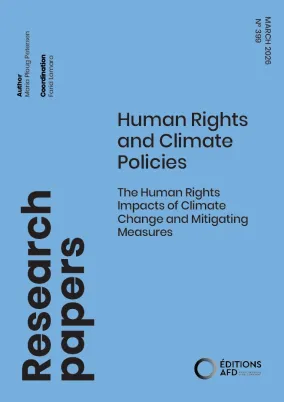
Reducing greenhouse gas emissions, protecting biodiversity, adapting to the impacts of climate change: ecological transitions are more critical than ever. They can open up new development opportunities, but they are not neutral — for economies or for societies. The challenge is to design transition and adaptation pathways that are truly just, meaning that they take into account the interests of workers and the most vulnerable throughout the process.
Our approach
This AFD research program examines pathways for ecological transition and pathways for adapting to the impacts of climate change. It focuses on several areas:
- Ecological transition policies: What are the potentially destabilizing effects of these policies on the economy (growth, employment, debt, unemployment, etc.)? How can these effects be managed and turned into opportunities?
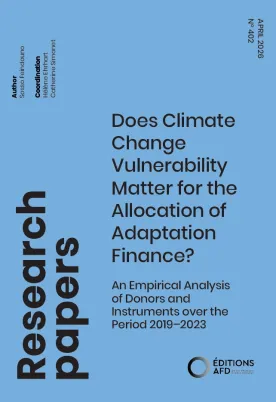
- Climate change adaptation: What adaptation strategies and measures are most appropriate for different scales of action? What new approaches should be adopted to better assess and manage increasingly complex climate risks?
- Biodiversity: In the face of biodiversity collapse, what promising responses — from the community level to the international level — are being developed to help mitigate or adapt to it?
Drawing on both qualitative and quantitative analytical methods, this program provides insights, tools, and lessons learned to support the design and implementation of public policies that combine ecological transition, economic development, and the preservation of social justice and access to essential goods, services, and fundamental rights — particularly for the most vulnerable populations.
Why is this a priority for AFD?
At AFD, environmental challenges go hand in hand with the transformation of economies and the fight against poverty and inequality, within an action framework fully aligned with the Paris Agreement and the Kunming-Montreal Global Biodiversity Framework. This research program provides analysis and the tools needed to meet the challenge of accelerating the ecological transition while improving people’s well-being.
Our tools
AFD develops analytical tools to study the interactions between the economic, ecological, and social dimensions of transition and adaptation pathways, in order to inform related public policies:
10+ countries are developing GEMMES or ESTEEM models with AFD’s support
AFD has developed two modeling tools — the GEMMES and ESTEEM tools — that make it possible to study the macroeconomic implications of ecological transitions.
Once the model has been calibrated with data from the partner country, research teams simulate a range of possible transition scenarios. These scenarios incorporate the financial and monetary risks linked to the effects of global warming, ecological disruptions, and transition policies. Public partners are involved in developing the tool and have all the data they need to decide on the transition policies best suited to their country.
ESGAP (Environmental Sustainability Gap) is an analytical framework developed by University College London (UCL) that assesses the environmental sustainability of a territory using science-based indicators.
It calculates an “environmental sustainability gap” for each environmental component, corresponding to the gap between its current state and a sustainable state. ESGAP can therefore help guide public decision-making toward the most critical areas for action.
AFD has supported several projects to test and refine the tool.
Since 2022, AFD has been developing methods to assess socio-economic risks associated with biodiversity loss, whether linked to the degradation of ecosystems themselves (“physical” risks) or to the public policies and standards put in place to reduce pressure on nature (“transition” risks).
Building on methodological work and a pilot study in South Africa, AFD and Expertise France are currently developing an open-access web platform that will allow any user to identify nature-related physical and transition risks in countries where data are available. To this end, AFD Group is working in collaboration with the Development Bank of Southern Africa (DBSA), the Bank of Tanzania, and the Mexican research institute INECC.
AFD has also produced a comparative study to help public development banks assess these risks within their sovereign and non-sovereign debt portfolios.
Our flagship initiatives
Explore our flagship initiatives:
As part of one component of the GEMMES Vietnam program (phase 2), research teams are focusing on the evolution of extreme climate events (droughts, floods, etc.). The various studies help identify emerging risks — such as episodes of intense heat — that will require significant adaptation efforts (urban planning, health systems, etc.). They lead to recommendations for public policy, contributing to AFD’s ongoing dialogue with the Vietnamese authorities on climate issues.
Launched in 2025, the Track Adapt research project examines water-related adaptation efforts (reducing the risks of drought, coastal erosion, etc.) in two South African coastal cities heavily affected by the consequences of climate change: Cape Town and Nelson Mandela Bay. The project aims to develop a new methodology that fosters a shared understanding of adaptation challenges and potential solutions among the various stakeholders involved.
The ECOPRONAT research program aims to promote the development of a pro-nature economy, drawing on research findings, by:
- developing knowledge and methodologies that integrate biodiversity into AFD Group’s policies and areas of intervention;
- mobilizing financial resources to drive these changes;
- strengthening the capacities of researchers in the Global South and supporting AFD’s partners through this process of change.
Our research projects
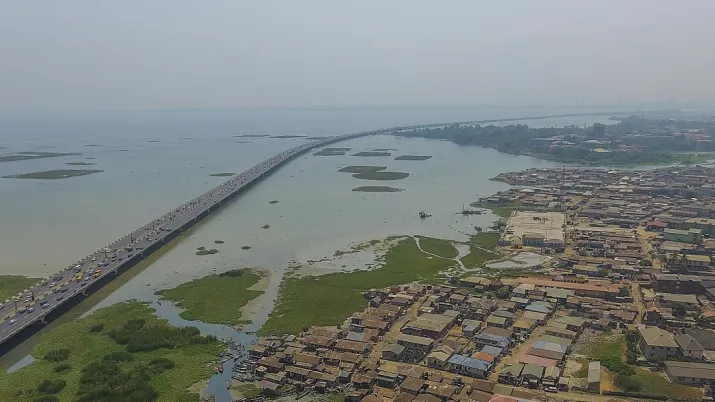
Exploring the dilemmas of Africa’s agroecological transition by 2050 (TAASF2050)
Ongoing
2022 - 2026

Watch our conferences on demand
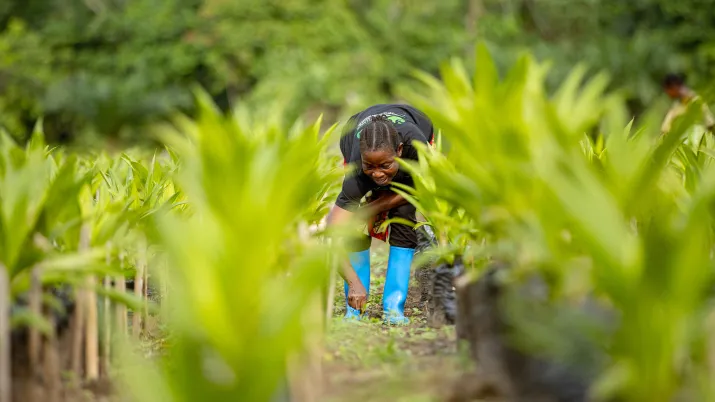
Research Conversations replay - Indonesia: Achieving a Just and Sustainable Energy Transition
Published on November 19, 2025
Our research team
-
Antoine GODIN
Economist - Modeler

-
Marie-Noëlle WOILLEZ
Research Officer

-
Julien CALAS
Research Officer on Biodiversity

-
Christophe BUFFET
Research Officer on Adaptation

-
Gaëlle LE TREUT
Economist, modeller

-
Oskar LECUYER
Research Officer, Environmental Economist

-
Guilherme MAGACHO
Economist - Modeller

-
Benoit FAIVRE-DUPAIGRE
Research Officer, Agronomist
-
Etienne ESPAGNE
Economist

-
Paul HADJI-LAZARO
Economist - Modeller